Vaishnava tradition · Bhakti-yoga
Yoga doesn’t end on the mat. It ends in devotion.
Vaishnavas are those who dedicate their lives to Krishna. Here we explain, without taking anything for granted, what they believe, how they live and why they sing.
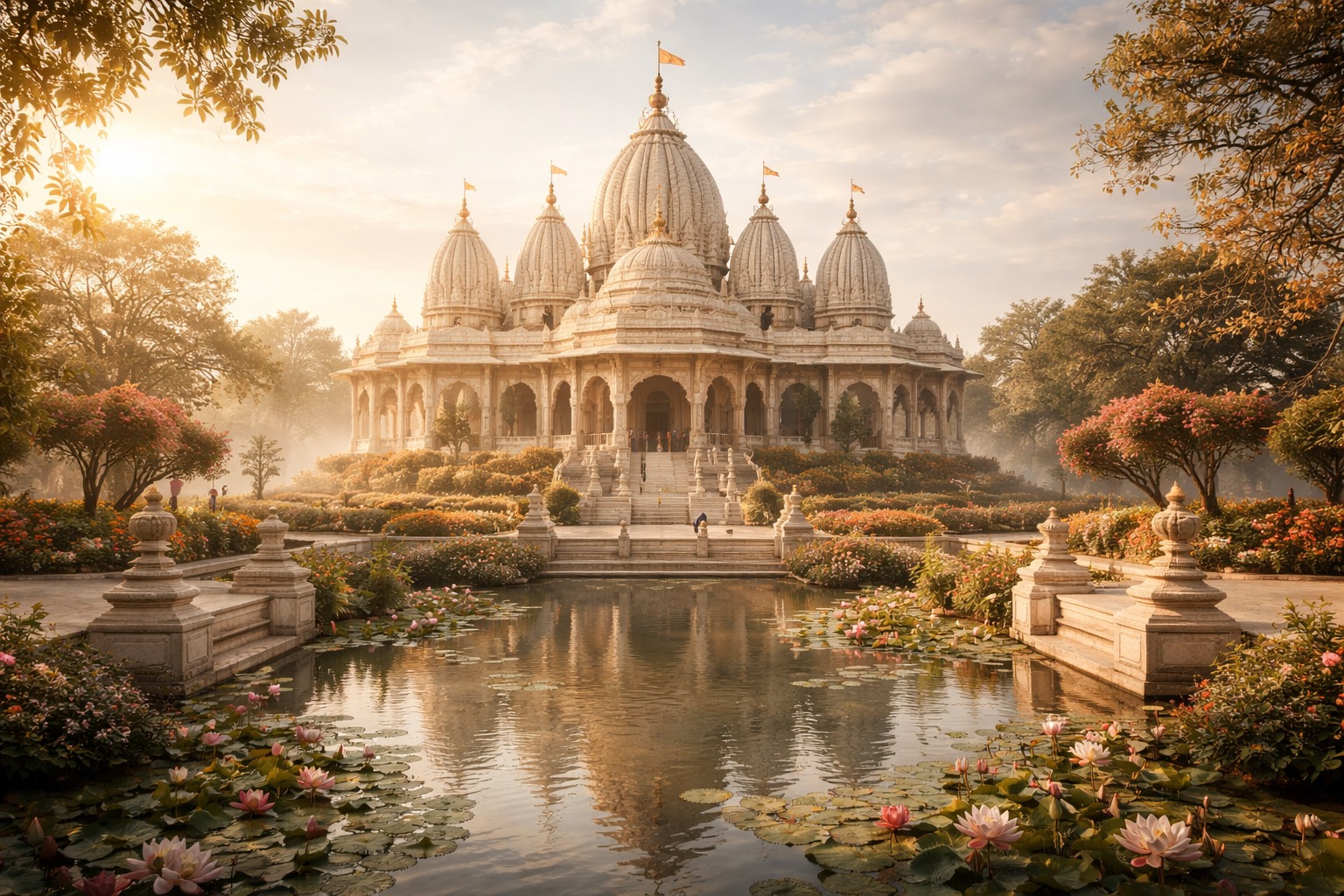
A verse for today
mayy eva mana ādhatsva mayi buddhiṃ niveśaya
Fix your mind and your intelligence on Me.
Bhagavad-gītā 12.8
If you are new
Three reads to get your bearings
About ten minutes each. By the end you will know what everything else is about.
What is Vaishnavism
One of the great traditions of India: who the Vaishnavas are, where they come from and what sets them apart.
Read →Who is Krishna
For a Vaishnava, God is not a faceless energy: He is a person with a name, a form and a story.
Read →What is bhakti-yoga
The yoga of devotion: how it differs from posture-based yoga and what its nine practices are.
Read →Understand
The ideas and the history
What is Hare Krishna
The movement, its founder and the most common questions.
Read →The Bhagavad-gītā
What it is about, how it is organised and where to start reading.
Read →Recommended books
What to read and in what order, with every book free on screen.
Read →Vaishnava philosophy
The soul, karma, reincarnation and devotion, step by step.
Read →The teachers
The chain of teachers, from Caitanya to Prabhupāda.
Read →Festivals
The twelve great dates of the year and what each one celebrates.
Read →Practise
From the book to daily life
Daily practice
How a Vaishnava lives: chanting, reading, food and company.
Read →What you need to get started
The book, the beads and the altar: what to look for and where to get it.
Read →Shops
Where to buy japa malas, books and devotional items.
Read →The japa mala
What the 108-bead mala is and how to chant on it.
Read →Digital japa mala
Chant the maha-mantra on a 108-bead mala on your phone.
Read →What is kirtan
Singing the names of God together.
Read →Mantras and prayers
The maha-mantra and the daily prayers, with translation.
Read →Prasādam recipes
Kicharī, dāl, halavā and more, step by step.
Read →Ekadashi
What it is, how to fast and every date of the year.
Read →The maha-mantra
Sixteen words
It is the first thing you hear in any temple. Vaishnavas chant it alone on a string of beads (japa) and together, with music (kīrtan).
Hare Krishna, Hare Krishna, Krishna Krishna, Hare Hare
Hare Rama, Hare Rama, Rama Rama, Hare Hare
Calendar
Coming up
The Vaishnava year follows the moon. Every fortnight there is an Ekadashi, a day of fasting and remembrance.
Next Ekadashi
Rama Ekadashi
Thursday 5 November
Break the fast on 6 November, 07:02 (sunrise) – 10:10 (London time).
- Sri Krsna Saradiya Rasayatra
- Sri Murari Gupta — Disappearance
- Laksmi Puja
- Fourth month of Caturmasya begins [PURNIMA SYSTEM]
- Srila Narottama Dasa Thakura — Disappearance
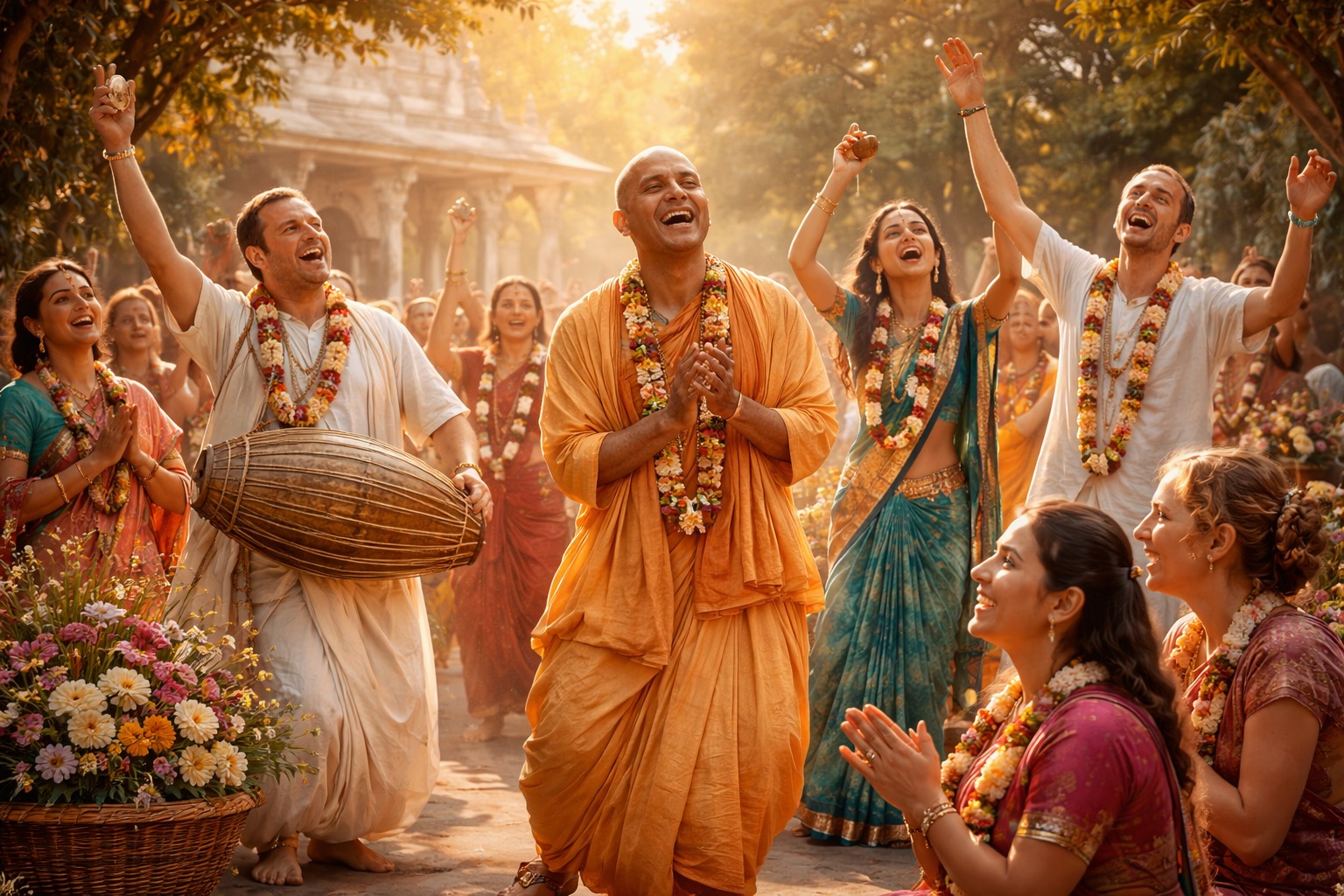
Temples
Reading helps. Going helps far more.
Bhakti is learned in company. At a temple you can hear the singing, taste the prasādam and ask anything you like of people who practise it every day.
- Free entry, even if you are just curious
- Open programme on Sundays at most temples
- Temples in Spain, Portugal, France and Latin America
Common questions
Before you go on
Are Vaishnavas and Hare Krishnas the same thing?
Hare Krishnas are Vaishnavas, but not all Vaishnavas are Hare Krishnas. Vaishnavism is a very ancient Indian tradition with hundreds of millions of followers; “Hare Krishna” is the popular name of one of its branches, the one Srila Prabhupada brought to the West in 1965.
Do you have to be Hindu or born in India?
No. The tradition teaches that devotion to God is natural to every person, whatever their country, family or religion of origin.
Can I visit a temple without being a devotee?
Yes. Temples are open to anyone who comes with respect. You usually take your shoes off at the door; many offer a free vegetarian meal on Sundays.